Fort Bragg, CA
Skunk Train — California Western Railroad
4.5· 7,401 Google reviews
Trip at a Glance
Source checked 2026-08-23- TypeHistoric redwood excursions from two Mendocino County depots
- LocationFort Bragg, CA
- Rating4.5 ★7,401 Google reviews
- AccessibilityBoarding ramps are provided, but some cars can require a transfer from a wheelchair to a coach seat; call before an access-dependent booking
About Skunk Train — California Western Railroad
Skunk Train is the passenger-excursion brand of California Western Railroad, a historic Mendocino County railroad founded in 1885. Today's public train rides do not make a through trip between Fort Bragg and Willits. The year-round Pudding Creek Express runs seven miles round trip from Fort Bragg to Glen Blair Junction, while the seasonal Wolf Tree Turn runs sixteen miles round trip from Willits through Tunnel No. 2 to Crowley in the Noyo River Canyon. The route choice changes the depot, scenery, duration, and nearby trip plan, so visitors should select the experience before navigating.
Choose the Correct Skunk Train Route
Choose the visit that fits your groupCoast-based visitors and shorter family itineraries
Pudding Creek Express from Fort Bragg
Ride about 90 minutes and seven miles round trip along Pudding Creek to Glen Blair Junction, with a redwood stop before returning.
Inland visitors and riders seeking the longer current train route
Wolf Tree Turn from Willits
Ride about two hours and sixteen miles round trip over the summit, through Tunnel No. 2, and into the Noyo River Canyon.
Visitors choosing a dated special-event journey
Flynn Creek Circus by train
A separate Willits special event is advertised for September 11-27, 2026; ticket class, show date, dog rule, and availability are event-specific.
Half-day and full-day Fort Bragg plans
Mendocino Coast Botanical Gardens
Pair a Fort Bragg departure with 47 acres of collections, woodland, and Pacific bluff trails about 2.6 road miles away.
Current Operating Status
Official operating information
Two separate Skunk Train routes operate from Fort Bragg and Willits; the live booking calendar controls exact departures
Schedule information was checked against the linked official source. Dates, availability, and operating conditions can change. Check official operating status ↗
Plan Your Visit
- ArriveArrive at least 30 minutes before departure; trains leave promptly
- ParkingThe operator publishes free parking at both the Fort Bragg and Willits depots
- AccessibilityBoarding ramps are provided, but some cars can require a transfer from a wheelchair to a coach seat; call before an access-dependent booking
- WeatherTrains run rain or shine; open cars and historic equipment can expose clothing to weather, dirt, cinders, and soot
- RestroomsThe operator says multiple restrooms are available aboard its trains
- Fort Bragg RoutePudding Creek Express: 7-mile, approximately 90-minute round trip from Fort Bragg to Glen Blair Junction, advertised year-round
- Willits RouteWolf Tree Turn: 16-mile, approximately 2-hour round trip from Willits through Tunnel No. 2 to Crowley, advertised early spring through December
- Fort Bragg Boarding100 West Laurel Street, Fort Bragg, California 95437
- Willits Boarding299 East Commercial Street, Willits, California
- Through Service BoundaryCurrent visitor excursions are separate out-and-back products; do not plan a passenger connection between Fort Bragg and Willits
- BookingReservations are strongly encouraged; exact dates, times, capacity, car classes, and substitutions are controlled by the live official booking inventory
- Food And DrinkOutside food is allowed; outside alcohol is not. Snacks and beverages are sold on board, and date-specific Glen Blair food service can be preordered when offered
- DogsDogs are allowed on most train experiences for a fee, but exclusions apply to some premium and special-event products
- TimezoneAll published times are Pacific Time
Find the Depot
The Trains
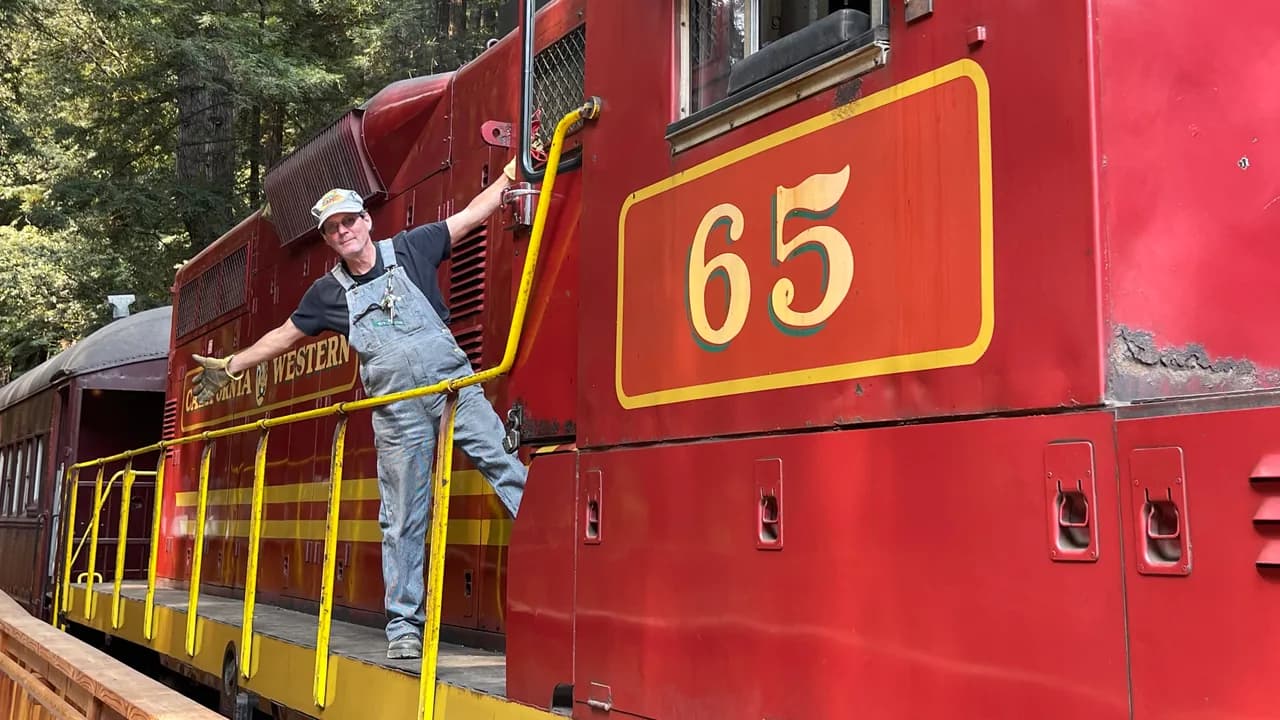
Current trip pages describe historic diesel-electric locomotives and passenger cars with open-air and concession or bar-car options. Locomotive 65 is documented in this gallery, while the operator's 2026 materials say its red-white-and-blue locomotive 1776 leads most Fort Bragg trains. Steam and premium equipment appear only on specified products and dates: the 2026 Days of Steam uses the visiting Chiggen on select Fort Bragg weekends, and the adult-only Redwood and Noyo lounge cars have separate rules. No locomotive or car shown here is promised for a particular departure.
History
The Fort Bragg Railroad began moving lumber and passengers, forming the California Western foundation.
Tunnel No. 2 was completed at the summit on the eastern side of the route.
Gasoline rail motorcars and oil heaters inspired the enduring Skunk Train nickname.
Mendocino Railway acquired and revived California Western Railroad after bankruptcy.
Tunnel No. 1 collapsed near Fort Bragg, interrupting through operation.
The operator announced federally financed infrastructure work including Tunnel No. 1 rehabilitation.
The public schedule continued as separate Fort Bragg and Willits excursions with new premium and special-event offerings.
See full history
The Fort Bragg Railroad began in 1885 to move lumber and became the foundation of California Western Railroad. Tunnel No. 2 was completed in 1911, opening the summit route used by today's Willits excursion. Gasoline rail motorcars introduced in 1925 combined engine exhaust with oil-stove fumes, inspiring the Skunk nickname. Mendocino Railway acquired the railroad in 2004 after bankruptcy. A 2013 collapse closed Tunnel No. 1 near Fort Bragg; the operator announced major rehabilitation work in 2024. Current public pages continue to sell separate western and eastern excursions rather than a through ride, so the historic 40-mile railroad should not be presented as a current 40-mile passenger itinerary.
Frequently Asked Questions
Does the Skunk Train run from Fort Bragg to Willits?
Not as a current public through excursion. Choose either the Fort Bragg Pudding Creek Express or the Willits Wolf Tree Turn and navigate to that depot.
How long is the Fort Bragg train ride?
The Pudding Creek Express is advertised as a seven-mile, approximately 90-minute round trip to Glen Blair Junction.
How long is the Willits train ride?
The Wolf Tree Turn is advertised as a sixteen-mile, approximately two-hour round trip through Tunnel No. 2 to Crowley.
How early should I arrive?
The operator asks guests to arrive at least 30 minutes before departure because trains leave promptly.
Is the Skunk Train wheelchair accessible?
The operator provides boarding ramps, but some cars may require transferring to a coach seat. Call 707-964-6371 before an access-dependent booking.
Can I bring a dog?
Dogs are accepted on most train experiences for a fee, but some premium and special-event products exclude them. Check the exact trip before booking.
Is steam power guaranteed?
No. Steam is limited to specified Days of Steam dates and equipment can change. The regular route and date page controls motive power.
Are there restrooms and food aboard?
The operator says trains have restrooms and sell snacks and beverages. Outside food is allowed, outside alcohol is not, and date-specific Glen Blair meals may require advance ordering.
Sources & Verification
Source-checked August 23, 2026. This free profile has not yet been claimed or confirmed by the operator.
- Official home page for current route choices, seasonal pattern, railbikes, and booking inventory
- Official Pudding Creek Express page for Fort Bragg route, duration, distance, Glen Blair stop, food, arrival, access, dogs, and equipment
- Official Wolf Tree Turn page for Willits route, duration, distance, Tunnel No. 2, Crowley stop, season, arrival, access, and dogs
- Official FAQ for reservations, parking, restrooms, accessibility, food, alcohol, dogs, phone, and nickname
- Official history for the 1885 railroad foundation
- Official Pudding Creek and Willits route-history pages
- Official 2024 infrastructure release for Mendocino Railway acquisition and Tunnel No. 1 rehabilitation
- Official 2026 Flynn Creek Circus page for September 11-27 event window and Willits address
- Official contact page for public phone and correction form
- OpenStreetMap geocoding and route-data attribution